
UK Inheritance Tax Planning for Expats: Gifting, Trusts and the Residency Question
- June 22, 2026
- Posted by: Graeme Robertson
- Category: Uncategorized
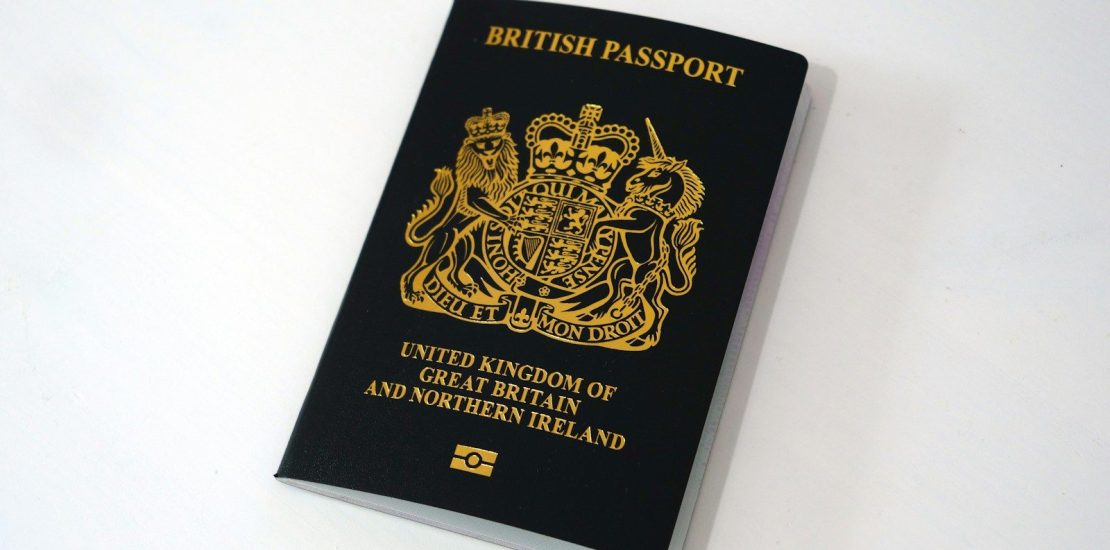
The UK inheritance tax framework has shifted substantially over the past two years. The November 2024 Budget removed the non-dom regime, froze nil-rate bands, extended IHT to pensions from 2027, and capped Business Property Relief. For UK expats across Hong Kong, Singapore, the UAE and beyond, the combined effect is a planning environment that demands considerably more attention than it did a decade ago.
This is not simply a matter of tax efficiency. It touches on family structure, the psychology of wealth transfer, residency choices, and – increasingly – whether the jurisdictions expats moved to are still offering what they promised.
The Gifting Strategy: Earlier Than You Think
One of the most consistent themes emerging from the post-Budget planning environment is the shift towards early gifting. Where families previously planned to transfer wealth at death, many are now being advised to begin distributing assets while still alive – primarily to take advantage of the seven-year rule, under which most lifetime gifts and trust contributions made more than seven years before death are excluded from IHT entirely.
A tapered relief applies between three and seven years, progressively reducing the effective IHT rate. The trade-off is real: the individual giving away the asset loses access to it from the point of transfer. For many families, that is a significant personal decision, not just a financial one.
The Regular Gifts from Income Exemption
A less-discussed mechanism is gaining prominence: the regular gifts from income exemption, which allows individuals to give away unlimited amounts from income on a regular basis, free of IHT, provided the gifts do not reduce their standard of living. The gifts must come from income – salary or pension payments, not capital – and must be habitual rather than ad hoc.
“The regular giving from income exemption is something that has been underused in the past but is increasingly being asked about with inheritance tax applying to pensions from 2027,”says Clare Moffat at Royal London. “In theory, you can give away as much as you like using this exemption.”
For higher-earning expats with surplus income and limited appetite for complex structures, this is one of the more straightforward planning tools available.
The Psychology of Giving
There is a behavioural dimension to early inheritance that financial planning often underweights. The concern for many parents is not purely about tax – it is about whether an early transfer will be managed wisely, or whether it carries expectations and restrictions that create tension rather than gratitude.
Academic research suggests that the giver’s personality and framing matter considerably in how gifts are received and used. Experiential gifts and gifts directed at genuine needs – rather than imposed choices – tend to generate more goodwill and more sensible use of the capital. For families thinking about early inheritance, involving beneficiaries in an honest conversation about goals and needs tends to produce better outcomes than a unilateral transfer.
ISAs can also be a useful staging vehicle for beneficiaries who do not need capital immediately – allowing gifted funds to grow free of capital gains tax until the money is genuinely needed.
Blended Families and Equal Inheritance
The IHT changes are prompting families to revisit wills and succession structures that were drafted under a different set of assumptions – and many are discovering significant gaps, particularly in blended family situations.
Mutual wills – arrangements where couples bind each other on the distribution of assets after the first death – are sometimes proposed as a solution for families where both partners have children from previous relationships. In theory, the structure ensures the surviving spouse cannot later change their will in favour of their own children at the expense of the other’s.
In practice, however, experts are consistently cautious about mutual wills. Stuart Downey, a partner who leads the will, trust and estate disputes team at TWM Solicitors, describes the approach as “dangerous” – noting that the surviving spouse retains the ability to spend, transfer or rearrange assets during their lifetime, with limited control over whether the original intentions are carried out.
“We have a standing policy at TWM not to draft them, because they create more problems than they are worth and the objectives of clients can be better achieved in other ways.” – Stuart Downey, TWM Solicitors
Trust Structures for Blended Families
The more widely recommended approach for blended families is a well-structured will with a trust arrangement. Under this model, the surviving spouse may have the right to remain in the family home for life, with the property passing to the children of both partners on the second death – rather than being subject to the survivor’s unilateral decisions.
Trusts also allow assets to be divided so that part passes directly to the surviving spouse while the remainder is held for all children collectively. Trustees provide an additional layer of oversight, helping ensure that the original intentions are carried out rather than eroded over time.
Regrexit: The Return to the UK
For many UK expats who relocated to low-tax jurisdictions following the abolition of the non-dom regime, the picture has become more complicated than anticipated.
A pattern of what advisers are calling “Regrexit” has emerged among some who left the UK for Dubai and other Gulf destinations, driven by a combination of lifestyle adjustments, marital strain, and, more recently, geopolitical instability. Reports that one in eight British residents of the UAE had left since Iran’s attacks on the country began in February 2026 have accelerated conversations about whether the tax savings justify the broader disruption.
One Dubai-based lawyer cited practical concerns among recent UK arrivals including summer heat, high education costs, limited green space and a competitive job market – noting that “Dubai isn’t quite the dream it’s often portrayed to be.”
The picture in other jurisdictions is also evolving. Countries such as Cyprus, Portugal, Italy, Switzerland and Monaco are being reconsidered as alternatives – each with different tax treaty positions, minimum residency requirements and estate planning implications.
The Tax Cost of Returning
Returning to the UK carries its own planning requirements. Those who have been non-UK resident for at least 10 years can potentially benefit from the Foreign Income and Gains regime, introduced in April 2025, which allows overseas capital gains and income to be realised tax-free in the UK for up to four years after return.
The pension carry-forward mechanism is also available to returnees who maintained a UK pension while abroad – allowing them to apply up to three prior years of unused pension allowances, up to £180,000 gross, provided they have sufficient UK earnings in the return year to cover those contributions.
The window for this kind of planning is finite. Once UK domicile is re-established and residency is confirmed, the full UK IHT framework applies – and the cost of delay compounds quickly.
Your Residency Position Is the Starting Point
Every element of UK IHT planning for expats – whether related to pensions, businesses, gifting, or family structures – connects back to a single foundational question: what is your current position under the UK Statutory Residence Test?
The SRT determines not only your UK tax residency status, but informs your domicile trajectory and the degree to which UK IHT will apply to your worldwide assets. Misunderstanding your position – or failing to reassess it as your circumstances change – is one of the most common and costly errors in cross-border estate planning.
START WITH YOUR RESIDENCY STATUS
Use Carey Suen’s UK Statutory Residence Test tool to assess where you stand – then speak with Annette Houlihan about building a plan around it.
|
This article is for informational purposes only and does not constitute financial advice. Carey Suen works exclusively with high-net-worth investors who meet the relevant eligibility criteria in their jurisdiction.